Skip to content

Electrical Problem Clues

We have probably all experienced the moment when we turn on too many high-current devices, such as microwaves or coffee makers, and the power drops out. When we overload a circuit a breaker is designed to trip and turn off the power to the offending circuit branch. This helps prevent circuits from overheating and potentially causing a fire.

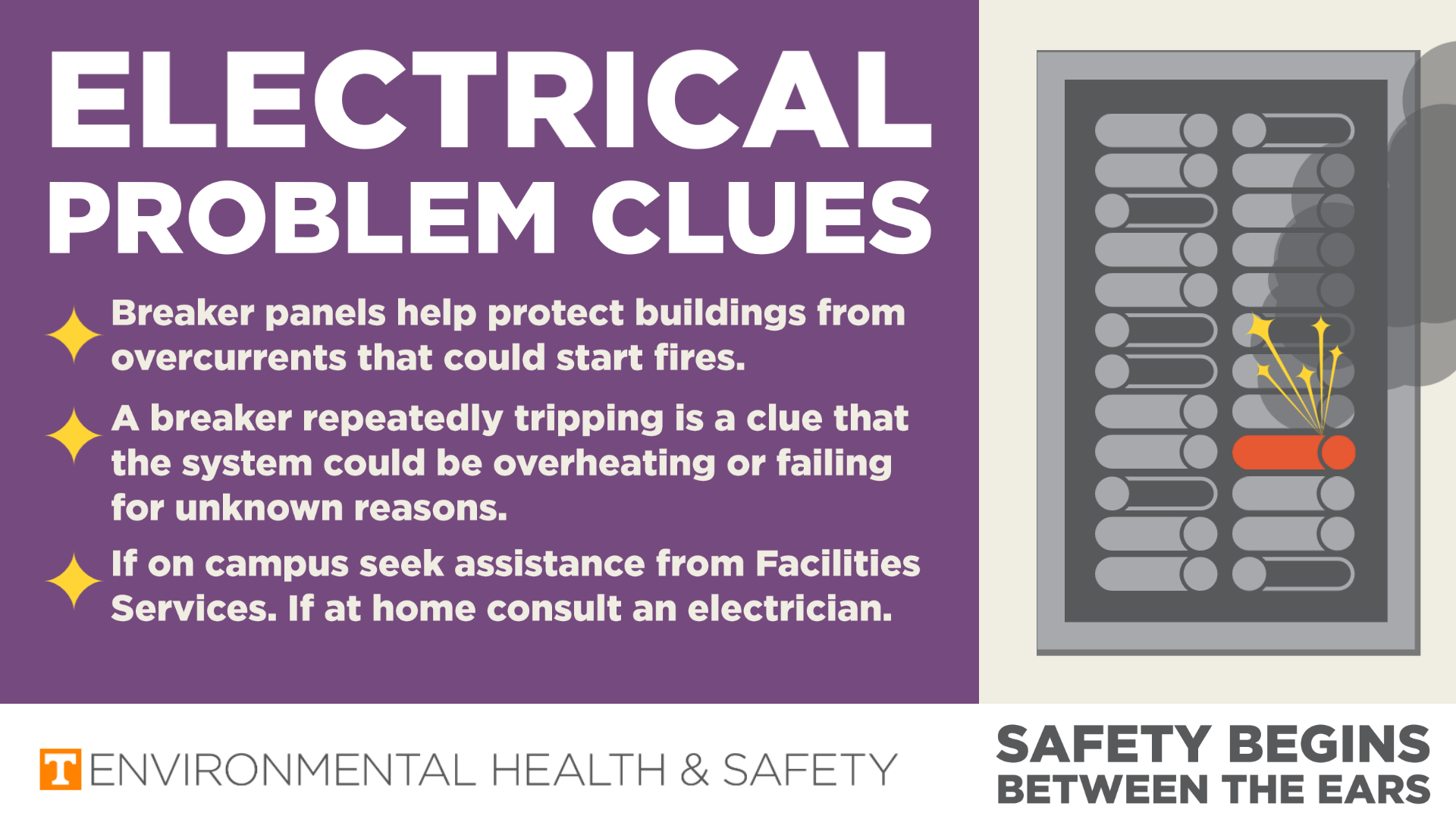
Even though these events happen, it’s important that we do not ignore them. If a breaker is failing repeatedly this is a clue that something is not right. An infographic of an electrical breaker panel with guidance. Recognize that a breaker repeatedly tripping evidence of a problem. If on campus contact Facilities Services. If at home consult an electrician.

What can you do?

  • Understand that breakers panels help protect buildings from overcurrents (too much current).
  • A breaker should not be reset if you do not know why it has failed. If a breaker is repeatedly tripping, assume something is wrong and get assistance.
  • If on campus seek assistance from Facilities Services.

Additional Resources

Don’t Get Overloaded

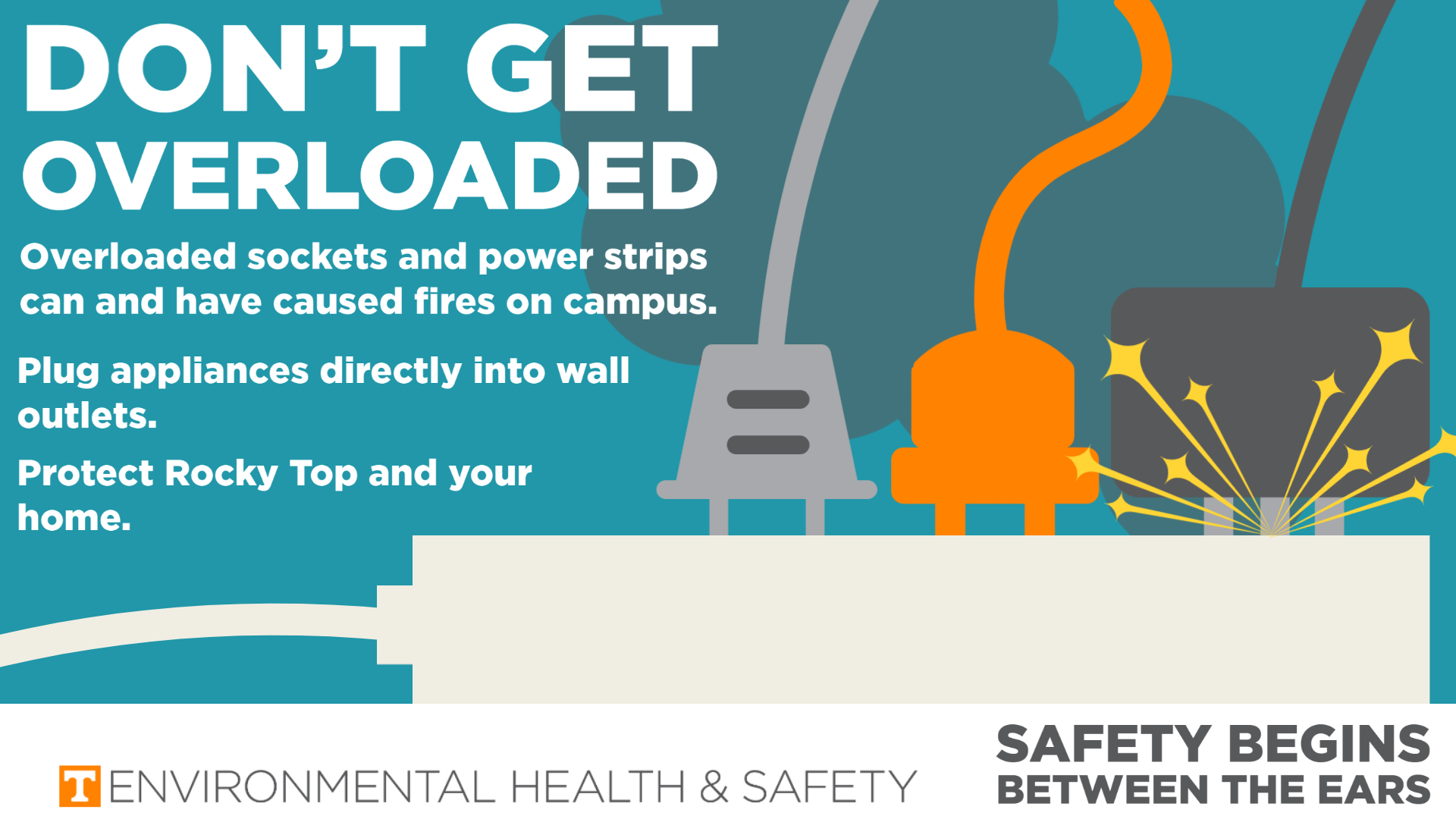
Winter is a time of year where we might consider using portable space heaters or other high current devices. Other times of year we might simply be using power strips to for refrigerators or freezers. These are all high current devices that may exceed the rated limits of a power strip. When this occurs a power strip can start a fire.

In fact we have had a fire recently in an office on campus due to a space heater plugged into a power strip. Because of these risks, EHS asks that you follow some basic guidance.

Power Strip Safety Tips

  • Realize the problem: Overloaded power strips have caused fires at UT.
  • Plug appliances directly into wall outlets.
  • Ensure your power strip is UL listed. Look for the holographic sticker with the listing (rating) information .
  • Check the capacity of your power strip. Are you within it?
  • When in doubt consult EHS.

For more information

Stop, Think, & Check Before You Connect

For the Month of February Environmental Health & Safety invites the campus community to think about electrical safety in mind. Electrical safety can often be overlooked but affect essentially everyone on campus. Most electrical systems are designed so that we never directly encounter electrical currents, but those systems can be damaged or fail, resulting in electrical shock, burns, or even fires.

Stop, Think & Check before you conect graphic. A person icon is shown with a hand extended to indicate "stop" holding an electrcial cord, with a thought bubble thinking about electricity.

This month follow our various posts about electrical hazards and risks including

  • Batteries recharging
  • Flexible Cords
  • Water and Ground Fault Circuit Interrupters
  • Lock Out Tag Out
  • Tripped electrical breaker problems
  • Overloaded electrical outlets
  • Grounded plugs
  • Overhead Power Lines

View and Share Our Graphics

We have created custom graphics for the above topics.

View and download them here.

The flagship campus of the University of Tennessee System and partner in the Tennessee Transfer Pathway.